How to visit TOEI Kyoto Studio Park
TOEI Kyoto Studio Park is a samurai- and ninja-themed film park best known for its full-scale Edo street set inside a working Kyoto studio lot. This isn’t a ride-heavy theme park in the usual sense — it works best as a half-day mix of walking, live shows, costume photos, and a few paid indoor attractions. The biggest difference between a rushed visit and a good one is whether you arrive early enough to enjoy the streets before show crowds build. This guide covers timings, tickets, route planning, and what to prioritize.
Quick overview: TOEI Kyoto Studio Park at a glance
You’ll get more out of this park if you treat it like a themed film set with timed shows, not a big all-day ride park.
- When to visit: Daily, usually 9am–5pm in spring and summer, and 10am–5pm in winter, with last entry around 4pm. Weekday mornings from opening to about 11am are noticeably calmer than weekends from late morning to mid-afternoon, because the main street, stage area, and paid indoor attractions all fill at once.
- Getting in: From ¥2,800 for standard adult entry. Admission with Attraction Pass starts from ¥4,200. Booking ahead matters most for weekends, school vacations, cherry blossom season, and Golden Week, when same-day capacity is less predictable.
- How long to allow: 3–4 hours suits most visitors. It stretches closer to 5 hours if you add costumes, the Ninja Fort, the haunted house, and multiple live shows.
- What most people miss: The Kamen Rider and Super Sentai gallery, and the small atmospheric corners of the Edo set that are quietest before the first big show starts.
- Is a guide worth it? Usually only if you want more filming context or a structured visit; for most visitors, a good map, the show schedule, and one or two paid add-ons do the job for less.
🎟️ Tickets for TOEI Kyoto Studio Park can sell out in advance during cherry blossom season, Golden Week, and major holiday weekends. Lock in your visit before the time you want is gone.
Jump to what you need
🕒 Where and when to go
🗓️ How much time do you need?
🎟️ Which ticket is right for you?
🗺️ Getting around
🎢 Must-ride attractions
♿ Facilities and accessibility
Where and when to go
How do you get to TOEI Kyoto Studio Park?
Address: 10 Uzumasa Higashihachiokacho, Ukyo-ku, Kyoto, Japan
- Tram: Randen Uzumasa Eigamura Station → 2–3 min walk → the simplest option from Arashiyama and other stops on the Keifuku line.
- Bus: Shohei-machi stop → about 5 min walk → useful if you want a no-transfer route from central Kyoto.
- Train + tram: Kyoto Station → JR Sagano Line + Randen transfer → about 40 min total → the most straightforward rail option from the main station.
- Car: On-site parking for up to 700 cars → best before late morning on weekends → easier than transit if you’re visiting with strollers or costume bags.
Which entrance should you use?
The park is straightforward to enter, but the most common mistake is arriving right before a show or holiday midday slot and losing your quietest time on the Edo street.
- Main entrance: Located at the front ticket plaza. Best for all ticket holders and same-day buyers. Expect about 5–10 min waits on ordinary weekdays and 20–30 min around opening on Golden Week and peak spring weekends.
When is TOEI Kyoto Studio Park open?
- Spring and summer: 9am–5pm
- Winter: 10am–5pm
- Mid-January maintenance period: Temporary closure on selected dates
- Last entry: Around 4pm
When is it busiest? Late morning to mid-afternoon on weekends, school vacations, cherry blossom dates, and Golden Week are the tightest windows, when the main street, stunt shows, and paid indoor attractions all peak together.
When should you actually go? Arrive at opening on a weekday if you want the quietest Edo street photos, the shortest indoor attraction waits, and first pick of costume rental slots.
How much time do you need?
| Visit type | Route | Duration | Walking distance | What you get |
|---|---|---|---|---|
Highlights only | Main gate → Edo street set → live ninja or samurai show → Kamen Rider/Super Sentai gallery → shops → exit | 2–2.5 hours | ~1.5km | You get the park’s strongest atmosphere and at least one live performance, but you’ll skip the paid maze, haunted house, and costume experience. |
Balanced visit | Main gate → Edo street set → live show → one or two paid attractions → hero gallery → snack break → photo time in the back streets → exit | 3–4 hours | ~2.5km | This adds the hands-on side of the park without dragging the day out, and it’s the sweet spot if you want both the movie-set feel and one or two indoor attractions. |
Full exploration | Main gate → full Edo set loop → first live show → costume rental → Ninja Fort → haunted house → mystery hunt or gallery stops → second show → shopping and snacks → exit | 4.5–6 hours | ~3.5km | This covers nearly everything people come for, but it’s more stop-start than it looks and works best if you’re happy pacing the day around showtimes and costume slots. |
How do you get around TOEI Kyoto Studio Park?
The park works like a compact theme park built around one main Edo street set, with indoor paid attractions and fan exhibits branching off it. It’s easy to cover in one visit, but you’ll waste time if you zigzag between the backstreets, the stage area, and indoor attractions without checking the show schedule first.
- Edo street set: The main outdoor heart of the park with shopfronts, bridges, alleys, and photo spots → budget 60–90 min.
- Show plaza: Live ninja and samurai action shows anchor the day here → budget 20–30 min per show, plus a few minutes early for seats.
- Indoor attractions zone: The Ninja Fort, haunted house, and other paid add-ons cluster the more active parts of the visit → budget 45–90 min depending on lines and how many you choose.
- Hero and collaboration areas: Kamen Rider, Super Sentai, and limited anime tie-ins add a fan-focused stop between shows → budget 20–40 min.
Suggested route: Start with the Edo streets at opening, then work backward from the first show you want to catch. That order works because the street set is quietest early, while the indoor attractions and galleries still hold up fine once family traffic builds later.
Maps and navigation tools
- Map: Printed park maps and official park maps cover the streets, show areas, and list paid attractions → pick one up at the entrance and screenshot the official map before arrival.
- Signage: Wayfinding is decent on the main street, but it’s easy to miss smaller side areas and collaborative exhibits without a map.
- Audio guide/app: There isn’t a standard audioguide focus here; the park’s apps and game tie-ins are better for themed interaction than for full navigation.
- Large outdoor POIs only: The park isn’t big enough to need offline GPS, but a guided visit helps if you want filming context rather than just orientation.
💡 Pro tip: Check the show schedule before you wander too far into photo mode — the park is small enough that timing matters more than distance, and missing the show you wanted can reshape the whole visit.
What are the must-ride attractions at TOEI Kyoto Studio Park?

Edo-period street set
Ride type: Walk-through film set
This is the park’s defining experience: a full-scale Edo street built for period dramas, not just a decorative backdrop. Slow down here, especially in the quieter lanes and over the bridges, because most visitors photograph the main street and miss the more convincing side corners where the set feels least theme-park-like. If filming is underway, parts of it can temporarily change or close.
Where to find it: The central outdoor area immediately beyond the main entrance, stretching through the heart of the park
Live ninja and samurai shows
Ride type: Live action stage show
These shows are one of the best reasons to visit with children or first-time visitors because they bring the park’s movie-studio identity to life. Even if the spoken Japanese goes over your head, the choreography, swordplay, and acrobatics are easy to follow. What people often miss is that getting there 5–10 minutes early matters more than usual if you want a front-row or center view.
Where to find it: Main show plaza near the central Edo streets
The Ninja Fort
Ride type: Indoor physical maze
This 3-story ninja labyrinth is the park’s most active attraction and one of the few places where older kids and adults can really burn energy. It’s more climbing-and-crawling fun than polished thrill ride, which is exactly why families like it. Visitors often underestimate how quickly sessions fill on busy days, especially after lunch.
Where to find it: Indoor paid-attractions area off the main park route
Haunted house ‘Cursed Doll’
Ride type: Walk-through horror attraction
If you want a break from sightseeing pace, this is the park’s standout darker attraction. It leans more Japanese horror than playful haunted-mansion camp, and that different tone is what catches people off guard. Many visitors also assume it will have the longest line, but in practice it’s often easier to fit in than the Ninja Fort.
Where to find it: Paid-attractions area near the indoor family activity zone
Costume transformation studio
Ride type: Dress-up and photo experience
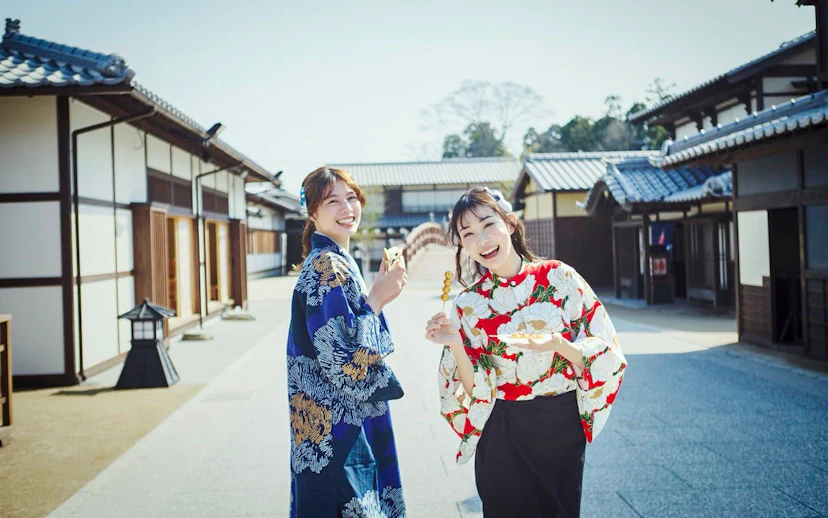
Renting a samurai, ninja, or kimono costume changes the park from a sightseeing stop into a role-play experience, especially on the Edo street set. The biggest thing people get wrong is leaving this too late — the later you wait, the fewer slots and sizes remain, and you lose the best light on the outdoor sets.
Where to find it: Costume studio area inside the park, near the main visitor services zone
Kamen Rider and Super Sentai gallery
Ride type: Walk-through fan exhibit
This gallery adds a completely different layer to the park: it reminds you that this isn’t only about samurai movies, but also about Toei’s broader screen legacy. Fans love the props and nostalgia, but even non-fans usually enjoy it as a quick, low-effort stop between bigger experiences. Many people miss it because they stay focused on the Edo streets and indoor maze.
Where to find it: Near the ninja plaza and main performance area
Facilities and accessibility
- 🎭 Costume studio: Samurai, ninja, kimono, and transformation rentals are available on-site, and the best selection is earlier in the day before popular slots fill.
- 🍽️ Food stalls / tavern: You’ll find themed snacks and simple meals inside the park, which are convenient mid-visit but work better as a lunch break than a destination meal.
- 🛍️ Gift shop / merchandise: Souvenir shopping is part of the visit, especially if a Kamen Rider, Evangelion, or seasonal collaboration is running, so leave time near the end.
- 🅿️ Parking: Large on-site parking is available for up to 700 cars, which makes the park unusually easy by Kyoto standards if you’re visiting with children or bulky bags.
- 🎟️ Attraction pass sales: Paid attraction access can be added on-site, which helps if you want to judge the crowd and your energy level before committing.
- 🪑 Rest pacing: The park has natural pause points around the show plaza and food areas, so it’s easier to break the day up than at larger ride-heavy parks.
- ♿ Mobility: The park itself is broadly wheelchair- and stroller-friendly, but not every attraction is equally accessible, especially the Ninja Fort and other more physical indoor experiences.
- 👁️ Visual impairments: This is a highly visual environment built around sets, performances, and props, so ask at entry for the simplest route and expect the strongest value to come from atmosphere rather than interpretive tools.
- 🧠 Cognitive and sensory needs: The quietest window is right after opening; live shows bring loud music, combat effects, and crowd concentration around the plaza, while the haunted house is intentionally intense.
- 👨👩👧 Families and strollers: Families can cover the main park route with a stroller, but the physically active attractions are separate decisions and not part of a pushchair-friendly path from start to finish.
- 🛣️ Terrain: Most of the experience is on walkable themed streets rather than steep outdoor paths, so route difficulty is more about attraction design than the overall ground surface.
- 🕐 Time: Around 3 hours is realistic with young children, and the best priorities are the street set, one live show, and one paid attraction rather than trying to do everything.
- 🏠 Facilities: The easiest family breaks happen around the food areas, costume studio, and show plaza, where you can stop without feeling like you’re abandoning the route.
- 💡 Engagement: Let children pick a role early — ninja, samurai, or hero fan — because the park gets more coherent for them once the visit has a story.
- 🎒 Logistics: Bring a small bag, arrive close to opening, and avoid saving the maze or costume rental for the last hour, when patience usually drops fastest.
- 📍 After your visit: Arashiyama is an easy next stop if your family still has energy and wants something calmer after the action-heavy part of the day.
Rules and restrictions
What you need to know before you go
- Entry requirement: Everyone aged 3 and above needs a valid ticket, and booking ahead makes the most sense for busy weekends, school holidays, and cherry blossom dates.
- Bag policy: Small day bags are easiest here because the park mixes photo walking with physical attractions, and larger bags quickly become awkward in indoor activity zones.
- Re-entry policy: Same-day re-entry is allowed on a valid same-day ticket, which makes it easier to split your day or step out for food without sacrificing the whole visit.
Not allowed
- 🚫 Food and drink: Outside snacks are best treated as backup rather than your main plan, since the park is designed around eating on-site or stepping out between visits.
- 🚬 Smoking / vaping: Smoke only in designated areas if provided, and don’t assume open themed streets count as informal smoking space.
- 🐾 Pets: Leave pets at home unless they are service animals, because a compact show-and-photo environment is harder to manage with animals in tow.
- 🖐️ Climbing and touching sets: Don’t climb on props or film-set structures that aren’t part of an attraction, because many areas are working scenic pieces rather than playground equipment.
Photography
Photography is one of the main reasons people come, and casual photos are part of the experience across the Edo streets, costume areas, and fan exhibits. The big exception is when filming, temporary staging, or collaboration exhibits create restricted zones, so always follow on-site directions if part of the set is being used. Flash and large setup gear are best kept out of tight spaces, and anything that blocks pathways will quickly feel out of place here.
Good to know
- Filming changes: Parts of the street set can occasionally change or close if live filming is underway, so don’t leave your favorite photo area until the very end.
- Attraction timing: Some paid attractions stop admitting guests before the park itself closes, so treat the final hour as photo and shopping time, not your main activity window.
Practical tips
- Booking and arrival: Book at least a few days ahead for weekends, cherry blossom season, and Golden Week, and aim to arrive 15–20 minutes before opening if photos on the empty Edo street matter to you.
- Pacing: Do the outdoor set first, because that’s where the atmosphere changes most once crowds build; save the hero gallery or shops for later, when the main street is at its busiest.
- Crowd management: Weekday mornings work especially well here because the park’s compact layout means one popular show can suddenly make the center feel busy even if total attendance is still moderate.
- What to bring or leave behind: Bring a small bag and comfortable shoes with grip, because the Ninja Fort is active and large bags add friction all day for very little gain.
- Food and drink: Eat either early or after the standard lunch rush, since stopping around noon can cut into the best show-and-attraction window more than people expect.
- Costume rentals: If you want the costume photos, don’t treat them as an add-on for the last hour — book or head there soon after arrival while the best time slots and daylight still work in your favor.
- Paid attractions: If you already know you want at least three paid experiences, the Attraction Pass is usually less frustrating than deciding one by one on the day.
What else is worth visiting nearby?
Commonly paired: Arashiyama Bamboo Grove
Distance: ~4km — 10–15 min by Randen tram
Why people combine them: It makes a strong same-day contrast: cinematic Edo streets first, then one of Kyoto’s best-known natural landscapes without a long transfer.
Commonly paired: Nijo Castle
Distance: ~8km — 30–35 min by city bus
Why people combine them: Both connect well to Kyoto’s historical imagination, but in very different ways — one as a film set and one as the real architectural backdrop.
Also nearby
- Koryu-ji Temple — ~700m | 10-min walk
A quieter historical stop near the park, ideal for a calm follow-up visit. - Randen Tram area — ~500m | 7-min walk
Handy connection point if you plan to continue onward to Arashiyama.
Eat, shop and stay near TOEI Kyoto Studio Park
- On-site: Themed snacks, quick meals, and tavern-style options inside the park are convenient and fit the visit well, but they’re best treated as a practical lunch stop rather than a destination meal.
- 💡 Pro tip: If you plan to stay 4 hours or more, eat before the noon rush or step out after your first show, because the park’s busiest food window overlaps with its best attraction window.
- Main park gift shop: Souvenirs, film-park merchandise, character goods, and toy swords are the easiest buys, and it’s the most reliable stop if you want a visit-specific keepsake.
- Seasonal collaboration shop: When anime or tokusatsu tie-ins are running, limited-edition goods can be more interesting than the standard souvenirs, so check these before assuming the exit shop is enough.
The park’s immediate area is more practical than atmospheric, so it works best for a short park-focused stay rather than as the most convenient base for a wider Kyoto trip.
- Price point: This area generally skews quieter and more functional than central sightseeing districts, with better odds of simpler mid-range stays than premium character hotels.
- Best for: Visitors who want a low-stress park morning, families with a car, or anyone pairing the park with Arashiyama rather than downtown Kyoto.
- Consider instead: Downtown Kyoto works better for first-time city visits and evening dining, while Arashiyama is the more appealing base if you want scenery, temples, and a lighter pace around the park visit.
Frequently asked questions about visiting TOEI Kyoto Studio Park
Most visits take 3–4 hours. If you add costume rental, the Ninja Fort, the haunted house, and more than one live show, it can easily stretch to 4.5–6 hours, so it helps to decide early whether you want a highlights visit or a fuller attraction-heavy day.
You don’t always need to book in advance on regular weekdays, but it’s the safer move for weekends, school vacations, cherry blossom season, and Golden Week. The park encourages online booking for busy dates, and same-day entry is less predictable when attendance spikes.
Usually not in the way it is at Kyoto’s most crowded landmarks. Entry lines are often manageable, but pre-booking still helps on peak dates because the bigger risk is not a huge queue so much as arriving at a busier time and losing your quietest photo window.
Arrive 15–20 minutes before opening if you want the best start. This park rewards early entry more than late flexibility, because the Edo streets are quietest first thing and the costume studio plus show schedule are easier to work around before midday traffic builds.
Yes, a small backpack or day bag is the easiest option. Larger bags aren’t ideal here because the visit mixes walking, photo stops, and physical attractions like the Ninja Fort, where bulky bags become more annoying than useful.
Yes, photography is a big part of the visit. The main exception is when filming, temporary staging, or certain collaboration areas create short-term restrictions, so check signs and staff directions if a section of the set looks active or partially roped off.
Yes, and group discounts are available for 10 or more people. It works especially well for school groups, families, and friend groups because the park has enough open space and short-format attractions to let people split briefly and regroup without much hassle.
Yes, it’s one of the easier Kyoto attractions to do with children if they like action shows, costumes, and active play more than traditional museums. The best family version is usually one live show, one paid attraction, time on the Edo streets, and a snack break.
The main park is broadly wheelchair-accessible, and the official park guidance notes that it is stroller-friendly too. The main limitation is that some paid attractions are more physical by design, so full-park accessibility is stronger in the outdoor set and show areas than in every activity.
Yes, simple meals and themed snacks are available on-site. If you’re staying for 4 hours or more, eating slightly early or slightly late works better than stopping right at noon, when food breaks overlap with the park’s busiest attraction window.
Sometimes, but you shouldn’t plan your day around it. The Edo streets are real filming spaces, and occasional production activity can add excitement, but it can also restrict access to parts of the set, so treat it as a bonus rather than a guaranteed experience.
Yes, some activities have restrictions. Children under 3 can enter the park free, but they cannot use most attractions, and some costume experiences also have size limits, so check eligibility before promising a specific add-on to younger children.