
From happy customers

Loved by 44 million+
Liam

Liam

Jun 2025
4/5
Nice trip. The temples are worth seeing, but be ready for crowds. Guide was helpful and gave us tips for other places in Osaka.
Yasmin

Yasmin

Aug 2025
4/5
Nice tour, just wish we had more time at Fushimi Inari. The gates go on forever! Our guide Hiro was super knowledgeable. Nara Park is fun but watch out for deer poop—it’s everywhere.
Elias

Elias

Jul 2025
5/5
Such a fun way to see this part of Japan. My wife and I were both impressed by how organized everything was. The guide’s stories made the drive fly by.
Olga

Olga

Jul 2025
5/5
Loved every second. The guide was super knowledgeable and even helped me take a family photo. The views from the bridge…just wow.
Boris Dulieu

Boris

Jun 2025
5/5
Our guide Nanami was amazing, she explain history of every place we visiting. The places was so beautiful, Nanami was awesome. You can take this trip into Kyoto you won't regret it
Tomas

Tomas

Aug 2025
4/5
Went with my parents, and we all enjoyed it. The timing at each spot felt a bit rushed, but honestly you get to see soooo much—golden pavilion, gardens, some cool shrines. Wish we could have stayed longer at the market, I was just getting started sampling snacks! Guide was friendly and answered all my mom’s endless questions.
Maya

Maya

Jun 2025
4/5
Took my little brother, and we both had fun! Guide was great with kids and kept things interesting. Wildlife preserve was the best part.
Priya

Priya

Aug 2025
5/5
Went with my parents, we all loved it! Guide spoke clearly and was very helpful. Bus was clean, stops were well chosen. Would recommend.

Kyoto day tours: Explore Japan’s cultural heart in a day

Kyoto, Japan’s historic former capital, is the perfect base for exploring the country’s cultural heartland. With over 1,200 years of history, the city is home to 17 UNESCO World Heritage Sites and more than 2,000 temples and shrines. Its well-preserved districts, Zen gardens, and geisha traditions offer a glimpse into Japan’s living history.

Guests can explore iconic landmarks like Arashiyama’s bamboo groves, visit seaside gems such as Amanohashidate, and wander through Ine’s preserved boathouses, all in easy day trips. Kyoto’s central location in the Kansai region and Japan’s efficient transport network make it ideal for travelers who want to experience Japan’s greatest hits in a single day.

What to expect on your Kyoto day tours

Kinkaku-ji Temple in Kyoto surrounded by trees and reflecting in a pond.

Kyoto city tour: Iconic sights you shouldn’t miss

Kyoto’s core sights capture the city’s history and culture in a compact loop, forming the centerpiece of most tours and first-time visits. Fushimi Inari Taisha is instantly recognizable for its torii gates, Kiyomizu-dera Temple stands out for its wooden stage, with nearby lanes like Ninenzaka and Ishibe Alley preserving the charm of old Kyoto.

Kinkaku-ji, one of Kyoto’s most photographed temples with a gold-leaf exterior, and in Arashiyama, the Sagano Bamboo Grove and Tenryū-ji Temple offer peaceful walking paths. Back in the city, Gion District preserves Kyoto’s geisha heritage, and Nijō Castle highlights Edo-era architecture and samurai history.

Passengers enjoying scenic views on a Kyoto full-day bus tour from Osaka.

Guided tours = Effortless Kyoto travel

Exploring Kyoto is easier with guided tours that take care of all the planning. Most departures leave from Osaka’s Namba/Shinsaibashi or Kyoto Station, with some offering hotel pickup for added convenience. Travel is by comfortable coaches, often with Wi-Fi and multilingual audio.

Tours typically run eight to ten hours, covering Kyoto and Nara’s key sights at a relaxed pace. English-speaking guides handle the details, so you can simply enjoy the experience.

Person in traditional attire feeding a deer in Nara Park, Japan.

A visit to Nara Deer Park

Many Kyoto day tours pair the city’s landmarks with a short trip to Nara, Japan’s first permanent capital. Nara Deer Park is home to over 1,200 free-roaming deer that politely bow for treats, making it a favorite for families. Nearby, Tōdai-ji Temple houses the 15-meter Great Buddha inside the world’s largest wooden hall.

Traditional boathouses along the water in Ine, Kyoto Day Tour.

Coast & countryside: Amanohashidate tours

For a change of pace, some Kyoto day trips head north into Kyoto Prefecture’s coast and countryside, offering a refreshing break from temple-hopping. Amanohashidate, a pine-covered sandbar known as the “Bridge to Heaven,” ranks among Japan’s top scenic views. Nearby, Ine Fishing Village charms visitors with 230 traditional funaya boathouses lining the waterfront.

Chopsticks holding marbled beef over hot pot with mushrooms, Kyoto food tour.

Made for every traveler

Kyoto day tours make comfort and convenience a priority. You’ll have time to enjoy lunch in lively temple streets or markets, choosing from quick bites to full meals. Some tours offer a Japanese buffet upgrade as well. Coaches are air-conditioned with space for strollers and daypacks, and guides are attentive to accessibility, suggesting easier routes when needed.

Things to know before booking your Kyoto day trip

1. Departure points, duration & guides

  • Start Points: Most tours conveniently depart from Kyoto Station or central Osaka (Namba/Shinsaibashi), both well-connected by Kansai’s rail network. Some itineraries even include direct hotel pickup within the Osaka Loop Line—perfect for families or first-timers.
  • Transfers: You’ll travel in modern, air-conditioned coaches, often equipped with Wi-Fi and multilingual audio commentary on select routes.
  • Duration: Expect a full-day experience of 8–10 hours, paced to cover 3–5 major stops without feeling rushed.

    • Classic city tours: 8–9.5 hrs
    • Kyoto + Nara combos: 10 hrs
    • Scenic coastal excursions (Amanohashidate & Ine): 11 hrs
  • Guides: All tours are led by professional English-speaking guides who share cultural insights and travel tips. Some itineraries also offer Spanish-speaking guides.

2. Admission to attractions

  • Included access: Some tours bundle entry to top sites like Kiyomizu-dera, Kinkaku-ji (Golden Pavilion), Nijō Castle, Tenryū-ji, Toda-ji, or Sanjūsangendō, so you can breeze through without extra payments.
  • Flexible options: Others focus on guided walks, letting you decide on the day whether to enter temples and gardens; you can purchase tickets on site if you want to enter the attraction.
  • Free attractions: Sites like Fushimi Inari Shrine and Nara Deer Park don’t require tickets and are included in most itineraries.

3. Lunch

  • Included lunch: Premium tours often offer buffet upgrades (Japanese or Western), guaranteeing a seat and curated dishes.
  • Free time: Standard tours provide lunch stops near vibrant temple streets or markets (e.g., Ninenzaka, Gion), so you can pick your own spot—from quick street snacks to hearty set meals.

4. Optional upgrades

  • Bilingual Guide: Enjoy tours conducted in English and Spanish, making it easy to follow along and ask questions.
  • Uji Extension: Select routes detour through Uji, birthplace of Japan’s finest matcha. Wander Omotesando Street to sample matcha desserts and visit Byodoin Temple (World Heritage Site).
  • Genji Hot Spring: Unwind at Uji’s only natural hot spring at the end of the day (optional, at own expense).

5. Comfort & accessibility

  • Coaches are spacious, with storage for foldable strollers and daypacks.
  • Guides are attentive to accessibility needs, often suggesting gentler walking routes for those who need them.

Compare your ticket options for Kyoto day tours

ExperienceDurationAttractions coveredMeals TransfersTickets to attractions Book now

Kyoto Heritage Tour: Arashiyama, Fushimi Inari & Kiyomizu-dera (Luxury Coach)

8 hr 30 min

Kiyomizu-dera, Tenryu-ji, Kinkaku-ji, Sanjusangendo, Arashiyama Bamboo Grove, Fushimi Inari

Optional Japanese buffet

Luxury coach from JR Kyoto Station, Wi-Fi, audio guide

✔ Entry to Kiyomizu-dera, Tenryu-ji, Kinkaku-ji, Sanjusangendo, Arashiyama Bamboo Grove Fushimi Inari Taisha

from ¥19,000

Kyoto Temples & Castle Tour: Arashiyama, Nijo Castle & Kinkaku-ji

9 hr 30 min

Kinkaku-ji, Arashiyama Bamboo Grove, Fushimi Inari, Nijo Castle, Kiyomizu-dera

Coach transfers from Kyoto, bilingual guide in English & Spanish

✔ Entry to Golden Pavilion, Nijo Castle, Kiyomizu-dera, Arashiyama Bamboo Grove, Fushimi Inari Taisha

from ¥18,974

Kyoto & Nara Guided Tour: Temples & Deer Park

8 hr 40 min – 10 hr

Kiyomizu Temple, Fushimi Inari, Nara Park

Pick-up from Osaka/Kyoto

✔ Entry to Fushimi Inari Taisha Shrine & Nara Park, ❌ Entry to Kiyomizu-dera

from ¥8,000

Kyoto’s Top Temples: Fushimi Inari, Kiyomizu-dera & Kinkaku-ji

8 hr 40 min – 10 hr

Fushimi Inari, Kiyomizu-dera, Kinkaku-ji, Yasaka Shrine, Gion

Transfers from Osaka/Kyoto or Osaka hotel pick-up

✔ Entry to Fushimi Inari Taisha Shrine, ❌ Entry to Kiyomizu-dera & Golden Pavilion

from ¥8,000

Kyoto & Nara: Bamboo Grove, Shrines & Deer Park

10 hr

Arashiyama Bamboo Grove, Togetsukyo Bridge, Fushimi Inari, Nara Park (Todai-ji optional)

Transfers from Osaka

✔ Entry to Arashiyama Bamboo Grove, Togetsukyo Bridge, Fushimi Inari Shrine, Nara Park

from ¥8,800

Kyoto Coast Tour: Amanohashidate & Ine Floating Village

11 hr

Amanohashidate, Chionji Temple, Ine Bay, Miyama Village

Transfers from Osaka/Kyoto

✔ Entry to Amanohashidate, Ine Funaya (Ine Bay) , Miyama Village, ❌ Entry to Chionji Temple

from ¥9,600

Matcha Tour: Nara Park, Uji & Hot Spring

10–11 hr

Nara Park, Kasuga Taisha, Byodoin Temple, Uji Hot Spring

Osaka hotel/meeting point transfers

✔ Entry to Nara Park, Kasuga Taisha Shrine visit, ❌ Entry to Byodo-in Temple

from ¥8,800

Top sites covered on your Kyoto tours

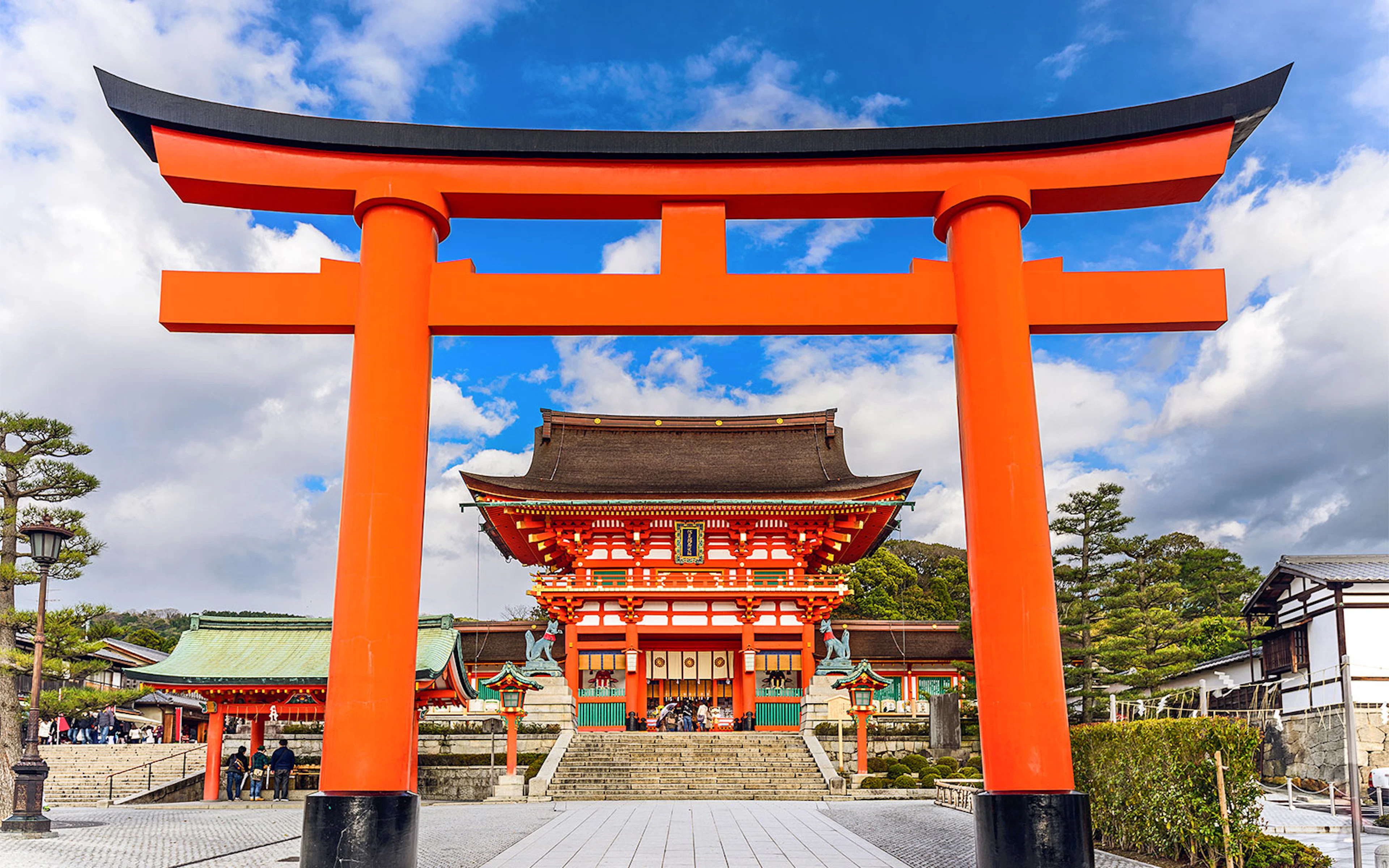
Fushimi Inari Taisha shrine entrance with iconic red torii gate, Kyoto, Japan.

Fushimi Inari Taisha

This is the head shrine of more than 30,000 Inari shrines across Japan, dedicated to Inari. Established in 711 CE, the complex spreads across Mount Inari with multiple sub-shrines connected by around 10,000 vermilion torii gates. The entire walk to the summit takes about two hours and passes through historical stone altars and fox statues, which are considered Inari’s messengers.

Kiyomizu-dera Temple with tourists on steps, Kyoto Full-day Bus Tour from Osaka.

Kiyomizu-dera Temple

Founded in 778 CE, Kiyomizu-dera is one of Kyoto’s most visited Buddhist temples and a UNESCO World Heritage Site. It’s renowned for its 13-meter wooden terrace that offers expansive city views and was historically a pilgrimage site. At its base lies the Otowa Waterfall, where visitors drink from three separate streams for blessings of health, love, and success. The temple complex also features pagodas, seasonal gardens, and a revered statue of Kannon, the goddess of mercy.

Kinkaku-ji Temple reflecting in a pond, surrounded by lush greenery in Kyoto.

Kinkaku-ji (Golden Pavilion)

Originally built in 1397 as shogun Ashikaga Yoshimitsu’s retirement villa, Kinkaku-ji became a Zen temple in 1408. Its top two floors are covered in pure gold leaf, symbolizing the Buddhist concept of the Pure Land. The pavilion overlooks Kyōko-chi (Mirror Pond), designed to reflect the structure and surrounding gardens.

Pathway through Arashiyama Bamboo Grove in Kyoto, Japan.

Arashiyama Bamboo Grove

The bamboo forest near Tenryū-ji has been a scenic retreat since the Heian period (794–1185), when aristocrats built villas in the area. The grove stretches several hundred meters and is known for the distinct rustling sound created by wind moving through the bamboo. The site is often visited together with Tenryū-ji Temple and Togetsukyō Bridge, both nearby.

Two people in kimonos walking through Gion district, Kyoto.

Gion District & Ishibe Alley

Gion emerged in the 17th century as a teahouse district near Yasaka Shrine and became Kyoto’s center for geisha and maiko culture. Many traditional ochaya (teahouses) and wooden machiya houses remain in use today, preserving the district’s Edo-period character. Ishibe Alley is one of Kyoto’s most photogenic preserved streets, with stone paving, narrow walkways, and restored architecture that reflect Kyoto’s pre-modern urban landscape.

Nijo Castle in Kyoto with traditional Japanese architecture and lush gardens.

Nijō Castle

Constructed in 1603 as the Kyoto residence of Tokugawa Ieyasu, Nijō Castle symbolized the shogunate’s power over the Imperial Court. It features two concentric fortifications, moats, and ornate palace buildings. The 'nightingale floors' in Ninomaru Palace were designed to chirp when stepped on, serving as a security measure. In 1867, Nijō Castle was the site where the last shogun formally returned power to the Emperor, ending the Edo period.

Kyoto city's top attractions in pictures

Visitors in kimonos walking through torii gates at Fushimi Inari Taisha, Kyoto.

Kimono-clad visitors walk beneath thousands of vermilion gates at Kyoto’s Fushimi Inari Shrine

Fushimi Inari Taisha entrance with visitors on steps, Kyoto, Japan.
Kiyomizu-dera temple in Kyoto surrounded by autumn foliage.
Steps lined with red lanterns leading to Kinkaku-ji temple, people walking up.
Person in kimono walking through Arashiyama Bamboo Grove, Kyoto.

Top sites covered on your Kyoto coast tours

Aerial view of Amanohashidate sandbar in Kyoto, Japan, with surrounding blue waters and lush greenery.

Amanohashidate

Stretching 3.6 km across Miyazu Bay, Amanohashidate is a natural sandbar covered with about 8,000 pine trees. It formed over thousands of years through coastal sediment deposition and is listed as one of Japan’s Three Scenic Views (alongside Matsushima and Miyajima). From the Kasamatsu Park viewpoint, the sandbar appears like a “bridge to heaven” when viewed upside down between one’s legs—an old local tradition known as matanozoki.

Ine Funaya boathouses along the waterfront with boats, Kyoto Coastal Tour.

Ine Bay

Ine is a fishing town famous for its funaya (boat houses)—two-story wooden homes built directly on the water, with boats stored on the ground floor and living quarters above. There are about 230 boathouses lining the bay, some dating to the Edo period, creating a distinctive coastal townscape unique to Japan

Traditional thatched-roof house in Miyama Kayabuki No Sato, surrounded by lush greenery, Kyoto Day Tour.

Miyama Village

Miyama is a preserved rural village known for its kayabuki (thatched-roof) farmhouses, many dating back to the Edo period (1603–1868). Over 30 thatched homes remain, showcasing traditional architectural techniques with steep roofs designed to withstand heavy snow. Roofs are rethatched every 20–25 years by a local craftsmen’s guild, preserving centuries-old methods.

Amanohashidate's top attractions in pictures

Traditional thatched-roof houses in Miyama Village, Kyoto, surrounded by lush greenery.

Thatched-roof homes in Miyama Village offer a glimpse into traditional countryside life in Kyoto

Ine Funaya boathouses along the waterfront on Kyoto Coastal Tour.
Pine trees lining a sandy path in Amanohashidate, Kyoto Coastal Tour.
Amanohashidate white sand beach with clear blue water and lush green hills on Kyoto Coastal Tour.
Wishes tied to a pine tree at a shrine in Kyoto, Japan.

Top sites covered on your Nara tours

Visitor feeding a deer at Nara Park with Todaiji Temple in the background.

Nara Park

Established in 1880, Nara Park covers about 660 hectares and is home to over 1,200 free-roaming sika deer, regarded as messengers of the gods in Kasuga Shinto tradition. Deer were once considered sacred and protected by law; harming one was historically punishable by death. Today they’re designated a national treasure, and visitors feed them special shika senbei crackers—a tradition dating back more than a century.

Todaiji Temple in Nara with visitors, part of Nara and Kyoto One-Day Bus Tour.

Tōdai-ji Temple & Great Buddha

Built in 752 CE, Tōdai-ji was commissioned by Emperor Shōmu to unite provincial temples under state Buddhism. It houses the Daibutsu, a 15 m-tall bronze statue of Vairocana Buddha cast using around 437 tonnes of bronze and 130 kg of gold. The Great Buddha Hall was once the world’s largest wooden building and remains a UNESCO World Heritage Site.

Byodo-in Temple in Uji, Japan, reflecting in a serene pond.

Byōdō-in Temple

Founded in 1052 during the Heian period, Byōdō-in Temple in Uji was originally built as a countryside villa for the Fujiwara family before being transformed into a Buddhist temple. Its elegant Phoenix Hall, reflected in the surrounding pond, is one of Japan’s most iconic images and even features on the ¥10 coin. As a UNESCO World Heritage Site, the temple offers a glimpse into aristocratic life and Pure Land Buddhist architecture at its peak.

Matcha tea and whisk with green tea powder on wooden table, part of Flavors of Japan Tour.

Uji

Uji is the birthplace of Japan’s high-grade matcha and an important center of tea cultivation since the 12th century, thanks to ideal misty river conditions and fertile soil.

Deer standing in front of a red torii gate at a shrine in Nara, Japan.

Nara’s sacred deer wander freely, often appearing near the red torii gates of local shrines

Moss-covered stone lanterns along a path at Kasuga Taisha, Nara, Japan.
Byodo - in temple
Giant Buddha statue inside Todai-ji Temple, Nara, Japan, part of Nara and Kyoto One-Day Bus Tour.
Visitors grinding matcha tea in a traditional workshop on Nara and Kyoto One-Day Bus Tour.

Plan your visit for Kyoto tours

Passengers enjoying scenic views on a Kyoto full-day bus tour from Osaka.

Full-day Kyoto day tours (8–10 hrs): Pickups typically take place between 7:30 AM and 9:50 AM, depending on your chosen location and tour type.

Meeting point pick-ups:

  • Most Kyoto day tours use fixed meeting points, which are well-connected and easy to find. This is the standard pick-up method for both Kyoto- and Osaka-based departures.
  • Nipponbashi Exit 2 (Namba/Shinsaibashi, Osaka): 8sm – 8:40am | A popular meeting spot for Osaka-based travelers, served by multiple subway and train lines.
  • Kyoto Station (Hachijo Exit / Sightseeing Bus Parking):
    9:40am– 9:50am | The main pickup hub for tours starting directly in Kyoto, conveniently connected to JR, Shinkansen, and airport lines.
  • Hotel Keihan Kyoto Grande (select tours)

Hotel pick-ups

  • A few itineraries—mainly Kyoto & Nara combination tours and Matcha & Hot Spring experiences—offer hotel pick-up options within Osaka city.
  • Osaka Hotels / B&Bs (Loop Line area): 7:30am– 8:30am
Boat on Oi River with autumn foliage in Arashiyama, Kyoto during guided tour from Osaka.
  • Spring (March–April): Cherry blossoms transform shrines, streets, and riversides into picture-perfect spots. It’s the most popular season, so book early.

  • Autumn (October–November): Enjoy cooler weather and brilliant red-and-gold foliage at gardens, parks, and temple grounds.

  • Winter (December–January): Crisp, clear skies make for stunning Tokyo Skytree and Mt. Fuji views. Illumination events light up districts like Shibuya and Roppongi.

  • Avoid: Golden Week (late April–early May) and New Year holidays bring dense crowds and higher prices.

Hikari Shinkansen bullet train at a station platform in Japan.

From Kansai International Airport (KIX):

  • JR Haruka Limited Express → Direct to Kyoto Station (75 min).
  • Nankai Rapi:t / Airport Express → KIX to Namba Station (40 min), then a short walk to the Nipponbashi meeting point.

From Osaka & nearby cities:

  • JR Tōkaidō Shinkansen for fast transfers from Tokyo, Nagoya, or Shin-Osaka. JR Lines, Kintetsu Line, Hanshin Line for easy regional travel.
  • Osaka Metro (Midosuji Line) connects Umeda, Shinsaibashi, and Namba directly to tour meeting points.
  • On tour coaches: All tours use air-conditioned buses for transfers between sights. Coaches typically offer Wi-Fi and space for foldable strollers and daypacks, with restroom stops scheduled on longer routes.
Guests selecting kimonos at Kyoto Kimono Rental with colorful fabric display.
  • Kyoto Tower – Climb up for panoramic city views, especially magical at sunset. Downstairs, explore shops, restaurants, and even a public bath with a view.
  • Kyoto Railway Museum – Step into Japan’s rail history with interactive exhibits, bullet train simulators, and a huge collection of locomotives.
  • TOEI Kyoto Studio Park – Walk through Edo-period film sets, watch live samurai performances, and maybe even bump into actors in costume.
  • Bus Tour – Hop on a sightseeing bus for a relaxed, guided ride around Kyoto’s iconic temples, shrines, and cultural hotspots.
  • Kyoto Aquarium – Discover marine life from Japan’s coastlines, see dolphins, penguins, and a mesmerizing jellyfish display.
  • Kimono Rentals in Kyoto – Dress in traditional attire and stroll through temples, gardens, and Gion’s streets for the ultimate Kyoto photo op.
Wheelchair accessibility at Berlin Wall Museum.
  • Wheelchairs & strollers: Major sights like Tenryū-ji and the Bamboo Grove have step-free paths. Fushimi Inari’s lower area is accessible, while the inner torii trail involves stairs. Kiyomizu-dera has slopes and uneven paving; Gion lanes are narrow and cobbled in parts and Nara Park/Tōdai-ji is mostly flat with ramps.
  • Meeting points: Kyoto Station (Hachijō Exit) and Nipponbashi Exit 2 have elevators, tactile paving, and staff to assist—arrive a little early if you need extra time.
  • Coaches: Foldable strollers and wheelchairs can be stored in the luggage bay; front seats can be requested for easier access. Rest stops are included on longer routes.
  • With kids: Arashiyama and Nara Park are easy to navigate and have plenty of space. A compact stroller works best in older districts.
  • Meals & breaks: Tours include free time for lunch near busy temple streets; buffet upgrades are available on select routes for guaranteed seating.
  • Tip: Let your guide know about any accessibility needs at check-in—they’ll adjust walking routes and entry points accordingly.
Notebook with "Helpful Tips" text on desk with laptop, coffee, and pencils.
  • Arrive early: Tours run on strict schedules, so reach your meeting point 15–20 minutes in advance to avoid delays, especially at busy hubs like Kyoto Station or Nipponbashi Exit 2.
  • Carry cash: Many temple shops, snack stalls, and offering boxes don’t accept cards. Keep a few ¥1,000 notes and coins handy for souvenirs, food, or omikuji fortune slips.
  • Dress respectfully: Cover shoulders and knees when visiting temples and shrines like Fushimi Inari or Kiyomizu-dera. Walk slowly, keep voices low, and follow the hand-washing ritual at purification fountains. Kimono rentals are available near popular sightseeing spots if you want to dress up.
  • Shopping on the go: Gion and Ninenzaka are great for tea, ceramics, and traditional sweets. Arashiyama is known for bamboo crafts and matcha treats, Nara Park for deer crackers and playful souvenirs, and Uji for premium matcha and wagashi.
  • Photo etiquette: Always ask before photographing locals, especially geisha or shopkeepers. Tripods and drones are usually restricted inside temple grounds. In crowded places like the Bamboo Grove, step aside for photos to keep paths clear
  • Respect wildlife: In Nara Park, deer are friendly but curious—feed only official crackers, keep your belongings zipped, and don’t touch or chase them.

Frequently asked questions about Kyoto day tours

What happens in a Kyoto day tour?

Kyoto Day Tours offer guided, all-in-one experiences through the city’s temples, gardens, and cultural gems—without the hassle of planning. From bamboo groves to hidden alleys, it’s Kyoto made easy.

What types of tours can I choose from?

From temple-hopping heritage trails and nature escapes to local food experiences and cultural encounters, there's something for every kind of traveler. Some tours even mix it up with Nara deer park visits or Fushimi sake tastings!

Are the tours guided?

Yes! All tours are led by professional English-speaking guides who are passionate locals or certified experts. They’re full of stories, historical gems, and insider tips you won’t find in a guidebook.

How long do Kyoto day tours usually last?

Most tours run between 8 to 9 hours, typically from morning to late afternoon. Perfect for soaking up the sights without burning out.

What’s included in the ticket price?

Most tours include round-trip transport, an expert guide, entrance to major sites, and sometimes meals (depending on the option you pick). Always check your ticket details for specifics.

Is lunch provided during the tour?

Some tours include a traditional buffet or set meal, while others leave lunch open so you can explore local flavors on your own. Options are usually mentioned clearly when booking.

Can I cancel or reschedule my ticket?

Many tours are non-refundable once booked, especially those with limited seats or third-party arrangements. If flexibility is important, look for tickets marked as “cancellable” or with free cancellation up to a certain date.

Are the tours suitable for wheelchair users or people with limited mobility?

Kyoto has many historic sites that include steps, uneven paths, and limited accessibility. Most temple areas are not wheelchair- or stroller-friendly. If you need assistance or accessibility options, we recommend contacting the tour provider before booking.

What’s the best time of year to book a Kyoto day tour?

Spring (March–April) for cherry blossoms and autumn (October–November) for fall foliage are absolutely stunning. However, each season offers something unique—like tranquil gardens in winter or vibrant festivals in summer.

What’s the best time of day to avoid crowds?

Early morning departures give you a head start at busy spots like Fushimi Inari Shrine or Kinkaku-ji. If you’re not a morning person, aim for shoulder seasons (late May or mid-September) when crowds are thinner.

Are there any hidden gems or less-touristy stops?

Yes! Some tours take you through Sannenzaka and Ninenzaka—historic alleyways near Kiyomizu-dera—and others may include local shopping streets, artisan villages, or teahouses known mostly to locals.

Can I explore on my own during the tour?

Most tours offer some free time at key stops like Arashiyama or Gion, so you can wander, snack, or snap Insta-worthy photos. Just be back in time—your group won’t wait!

What should I wear on a Kyoto day tour?

Dress comfortably and wear good walking shoes—Kyoto’s cobbled paths and temple stairs can be tricky. Bring a hat, sunscreen, and water bottle in summer; dress in layers during colder months.

Are meals vegetarian or allergy-friendly?

Many tours offer vegetarian options, but it’s best to check before booking or inform your operator of dietary needs. Note: Traditional meals may contain soy, fish broth, or other allergens.

Where is the meeting point for my tour?

Meeting points are usually near Kyoto Station or major hotels. Details will be in your confirmation email. Make sure to arrive at least 10–15 minutes early.

How do I get to the meeting point?

Public transport in Kyoto is efficient—JR lines, local buses, and taxis are all reliable. Your confirmation email often includes directions, so no need to stress.

Can I take photos during the tour?

Absolutely! Photography is allowed at most sites, though some shrines or temples may restrict photos indoors. Your guide will give you a heads-up when needed.

Is Wi-Fi available during the tour?

Not usually on the bus, but some stops or cafés may offer free Wi-Fi. Download maps or translation apps beforehand just in case.